Skip to content
Skinsafe
Fibre composition comparisonNot a medical service

Which fabrics
don’t agree
with you

Put the things that bother you next to the things that never do, and read the two composition labels side by side. Whatever appears in both groups can be set aside. What is left is the shortlist.

Start a comparisonHow the method worksNo account needed to try it

Skinsafe compares what is printed on labels. It gives no diagnosis, no treatment and no health advice, and it neither accepts nor produces any image of a body or skin. Anything on your skin that breaks, weeps, swells, spreads or lasts several days belongs with a doctor or a pharmacist.

Bothers me

3 items

  • 60%Acrylic
  • 72%Polyester
  • 30%Polyamide
  • 25%Viscose
  • 10%Wool
  • 5%Elastane
Always fine

4 items

  • 100%Cotton
  • 30%Polyester
  • 55%Linen
  • 45%Viscose
  • 5%Elastane

Left standing

Acrylic · Polyamide · Wool

Three fibres appear only in the group that bothers this person. Three others appear in both groups and are set aside.

02The method

Three photographs, then subtraction

There is no clever part. The whole thing is one operation from school arithmetic, applied to something nobody bothers to apply it to.

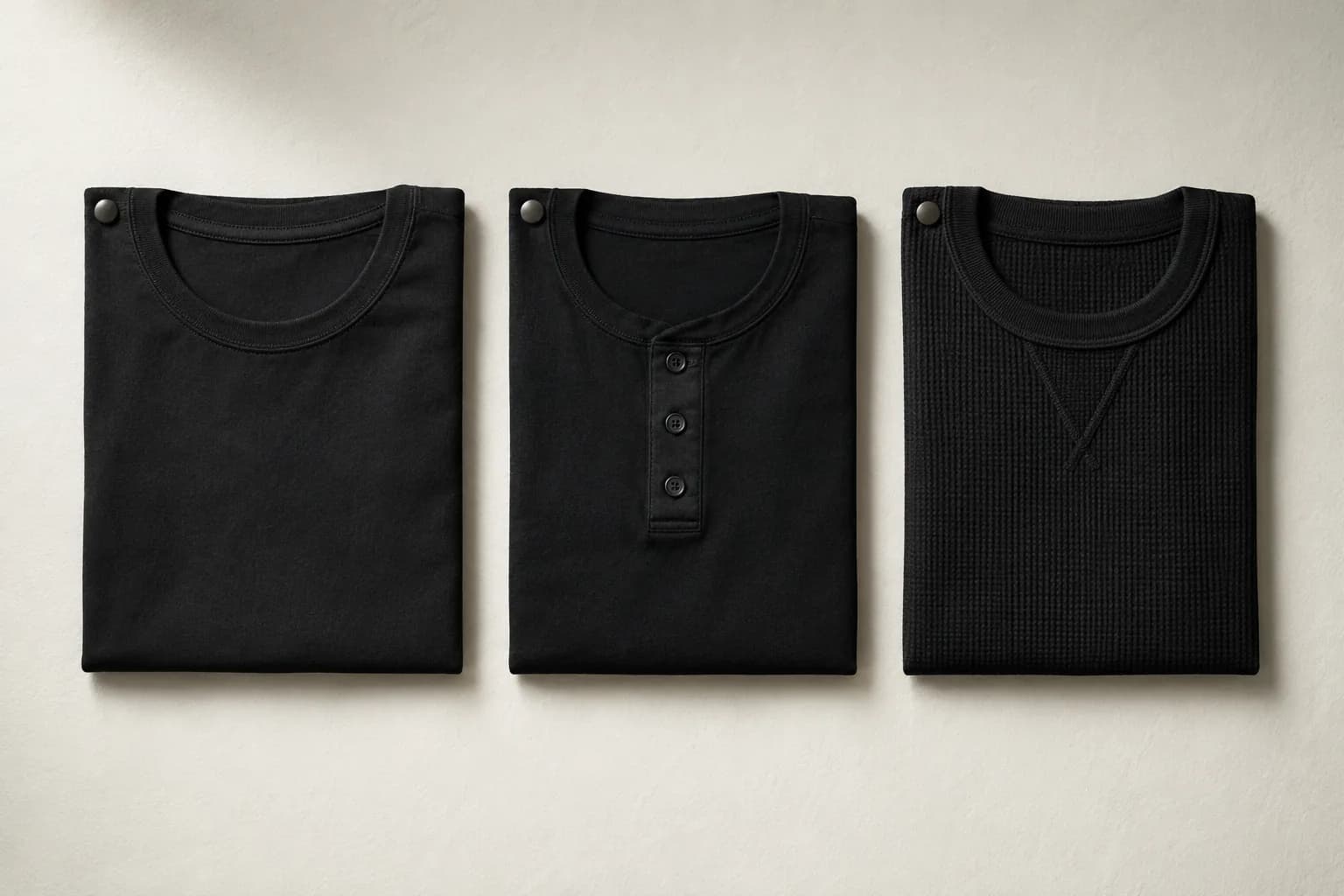
  1. Three dark garments folded and laid out in a row on pale archival paper.01

    Photograph the ones that bother you

    Two at minimum, more if you have them. Only the composition label — the small sewn-in one with the percentages. Nothing else about the garment is used.

    Photographs of a body or of skin are not accepted. There is no upload for them.

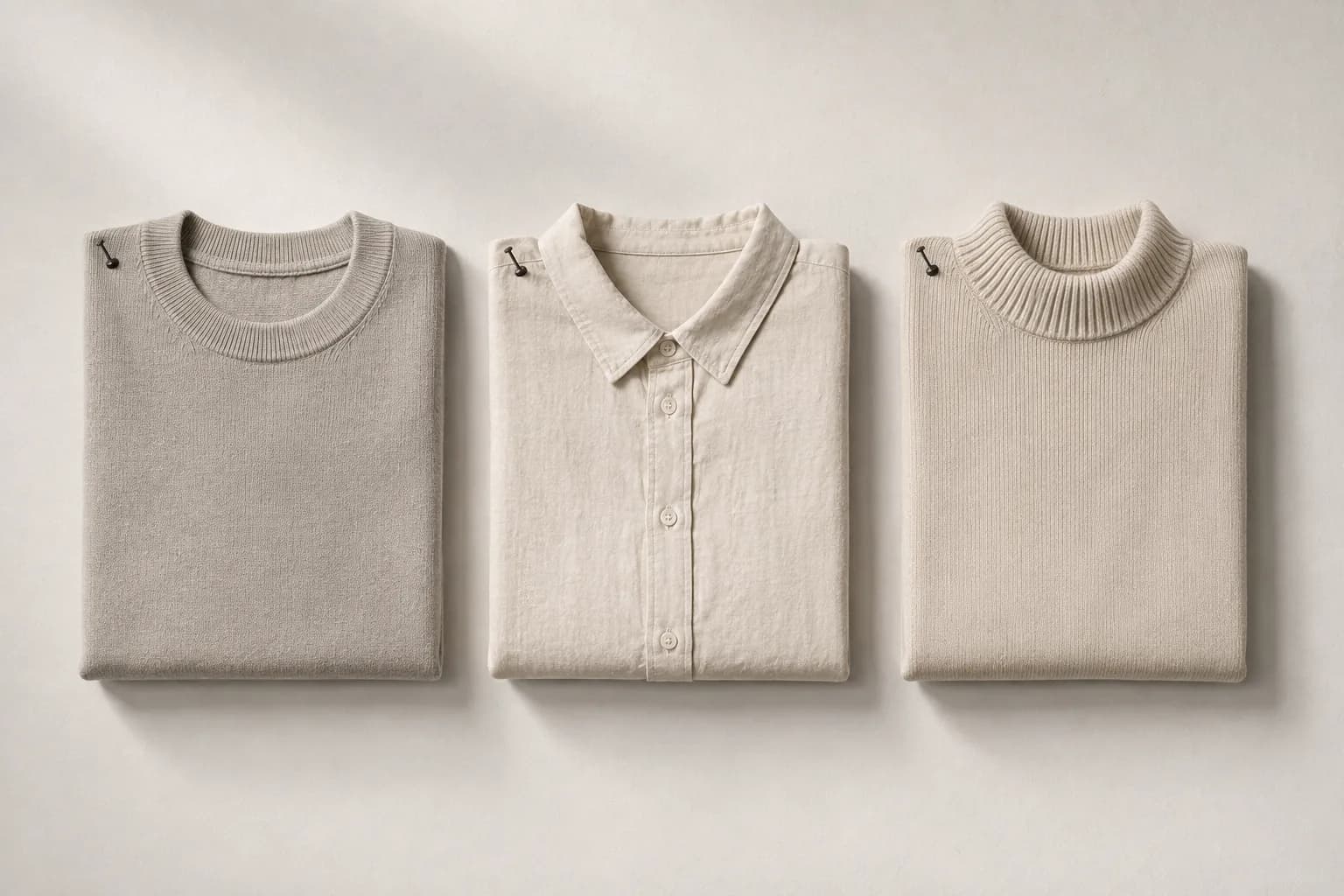
  2. Three pale garments folded and laid out in a row on pale archival paper.02

    Photograph the ones that never do

    This is the step people skip, and it is the step that does the work. Without garments you tolerate, nothing can be removed from the list — every fibre you own stays a suspect.

    Two at minimum. Four or five makes the result far harder to argue with.

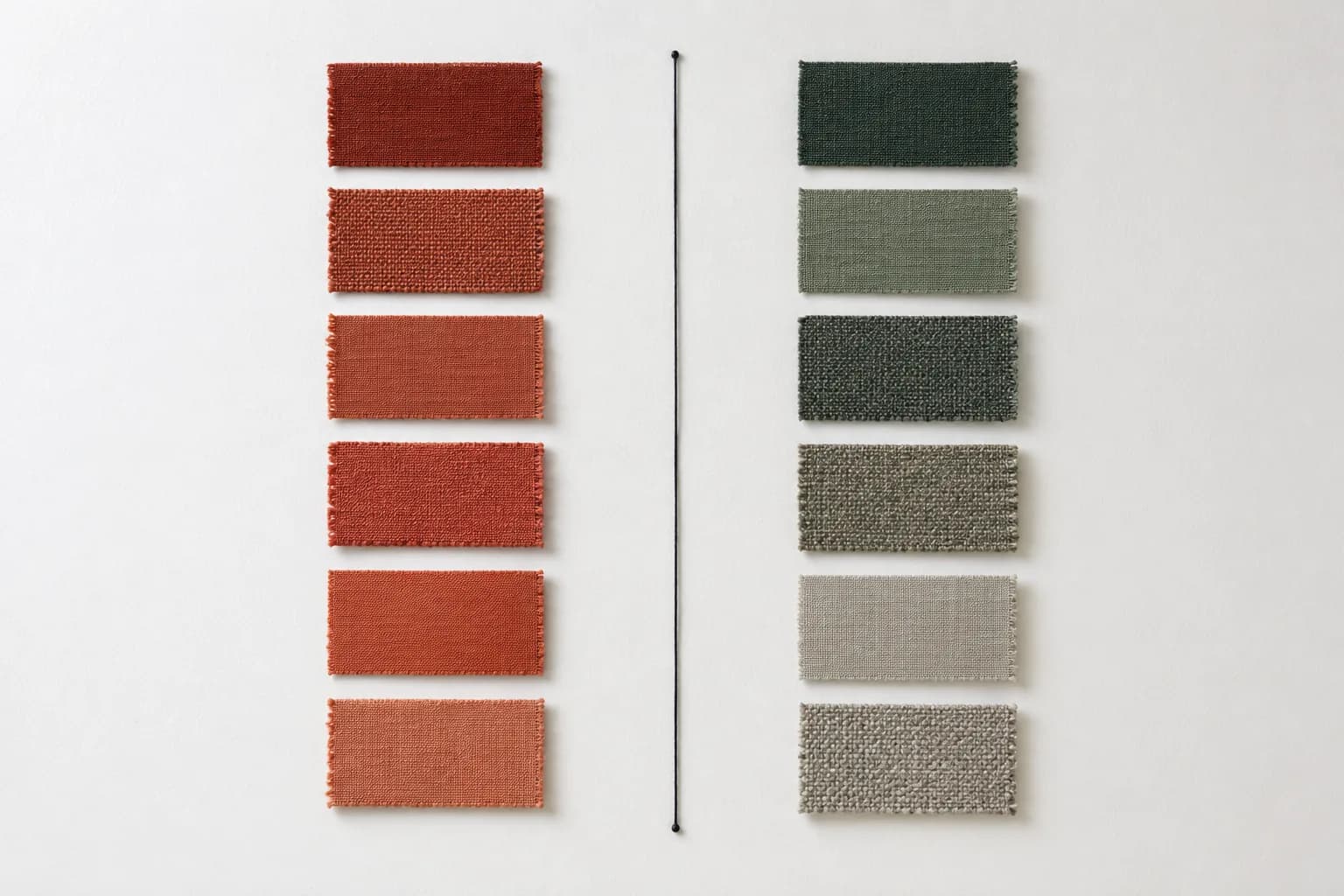
  3. Two columns of fabric swatches on paper with a single taut black thread dividing them.03

    Read what only one group contains

    Anything present in both groups is set aside — you wear it without trouble, so it is unlikely to be the thing. What appears only on the left is what is left to look at.

    The table is yours to take into a shop. It is not a conclusion about you.

03Why the second group matters

Every item you tolerate removes a suspect

Six fibres appear across the three garments that bother this person. On their own, all six are suspects. Switch on a garment that has never caused any trouble and watch what survives.

Still on the list

06

0 ruled out · 6 started

  • Acrylic
  • Elastane
  • Polyamide
  • Polyester
  • Viscose
  • Wool

Garments that have always been fine

The plain cotton shirt removes nothing, because it shares nothing with the group that bothers this person. That is not a failure of the method — it is the method telling you the truth about how much one garment can prove. Three against three produces coincidences. A dozen against a dozen produces something worth acting on.

04Worked example

Seven garments, one table

Three jumpers that bother someone, four things they wear constantly without a thought. Nothing here is invented for effect — these are compositions you will find in any wardrobe.

3
left standing
3
ruled out
8
fibres read
Fibres listed on each garment’s composition label, by group. A percentage means the fibre is on that label; a dash means it is not. The right-hand column states whether the fibre appears in one group only.
Fibre Bothers me Always fineReading
Navy roll neckGrey knit jumperLined blazerWhite oxford shirtEveryday t-shirtSummer trousersWeekend overshirt
Acrylic60%45%3%————Only in this group
Polyester—50%72%———30%Ruled out
Polyamide30%——————Only in this group
Wool10%——————Only in this group
Elastane—5%——5%——Ruled out
Viscose——25%——45%—Ruled out
Linen—————55%—Not in the bothered group
Cotton———100%95%—70%Not in the bothered group
“Only in this group” means exactly that and nothing more. It is where to look next, not an answer.

Findings card

3 bothered · 4 fine · Worked example

Left standing

On the labels of things that bother you, and on none of the labels of things that never do.

  • Acrylic3/3 · up to 60%
  • Polyamide1/3 · up to 30%
  • Wool1/3 · up to 10%

Ruled out

In both groups. You wear these without trouble, so they are unlikely to be what you are noticing.

  • Polyester1/4 fine items
  • Elastane1/4 fine items
  • Viscose1/4 fine items

This shows what your uncomfortable items have in common. Sharing a fibre isn't proof that fibre is the cause.

What the label doesn’t cover

A composition label lists fibres. It does not list most of what a garment is actually made of. Before settling on any fibre above, read this list.

  • 01 Dyes and pigments

    Colour is not a fibre and is not on the label. Two garments with identical composition can be dyed with entirely different chemistry.

  • 02 Resin and easy-care finishes

    Crease-resistant, shrink-resistant and water-repellent treatments are applied after the cloth is made. Nothing on the label records them.

  • 03 Seams, threads, tapes and interfacing

    The composition applies to the main fabric. Neck tapes, overlocked seams, sewing thread and stiffeners can be a different material entirely, and they are what sits against you.

  • 04 Detergent and softener residue

    What is left in the cloth after washing travels with the garment and is not a property of the garment. New clothes also carry residue from manufacturing until they have been washed.

  • 05 Fit, weight and how the cloth moves

    Friction, trapped heat and moisture are physical, not chemical. A tight cuff in a fibre that never bothers you can still be the thing you notice.
Next time you are in a shop

Turn the garment inside out and read the composition label before anything else. If it lists something from the left-hand column above, that is worth noticing — not avoiding on principle. Check the neck tape and the seams too: they are frequently a different material from the body of the garment, and they are the part that sits against you.

Anything on your skin that breaks, weeps, swells, spreads or lasts several days is not something this card can speak to. Please see a doctor or a pharmacist.

05What we look at

Cloth, and nothing else

No skin, no bodies, no before-and-after. The only thing this service reads is the composition label and the cloth it is sewn into.

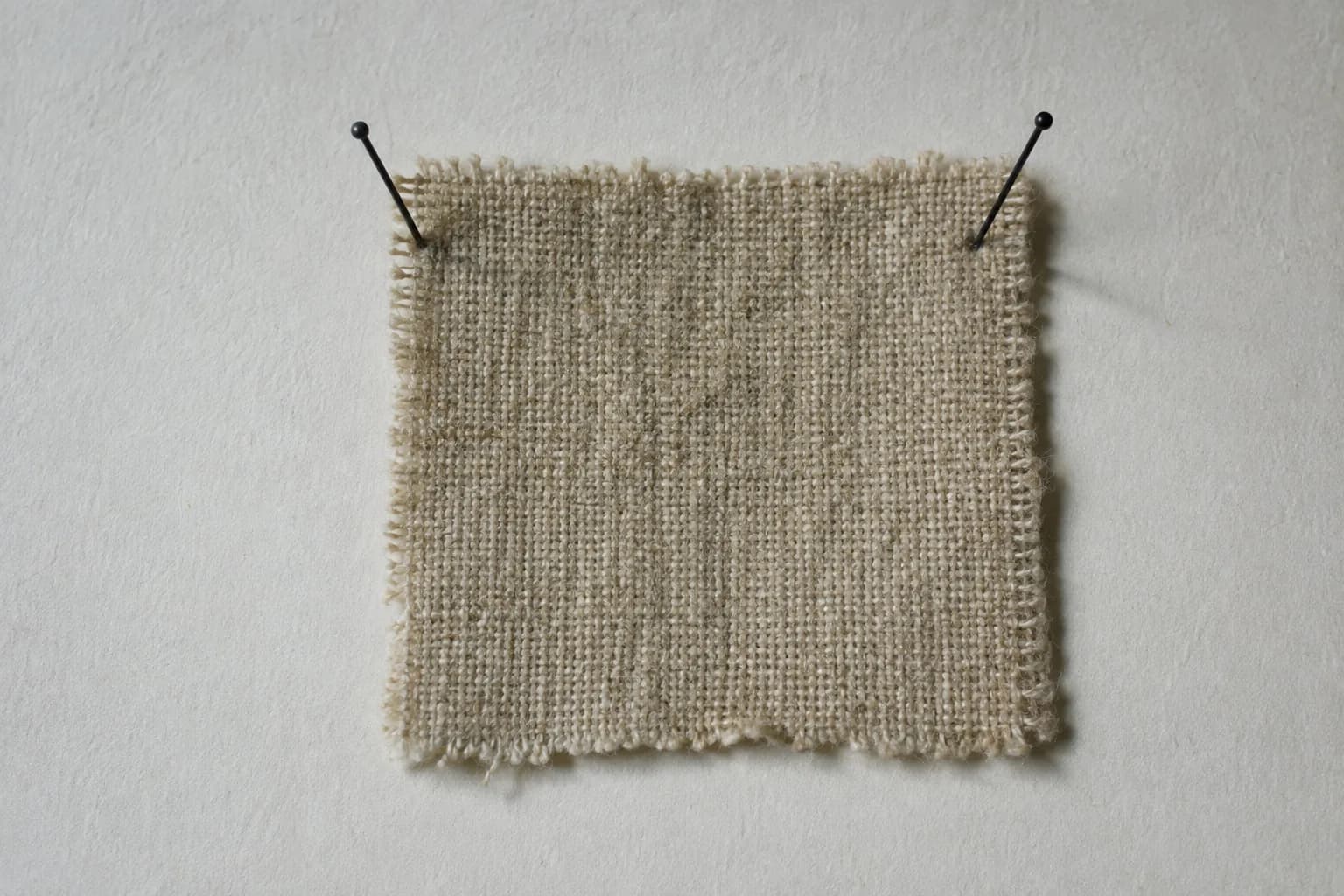
A square swatch of coarse undyed wool pinned flat to archival paper.
Undyed wool, plain weave
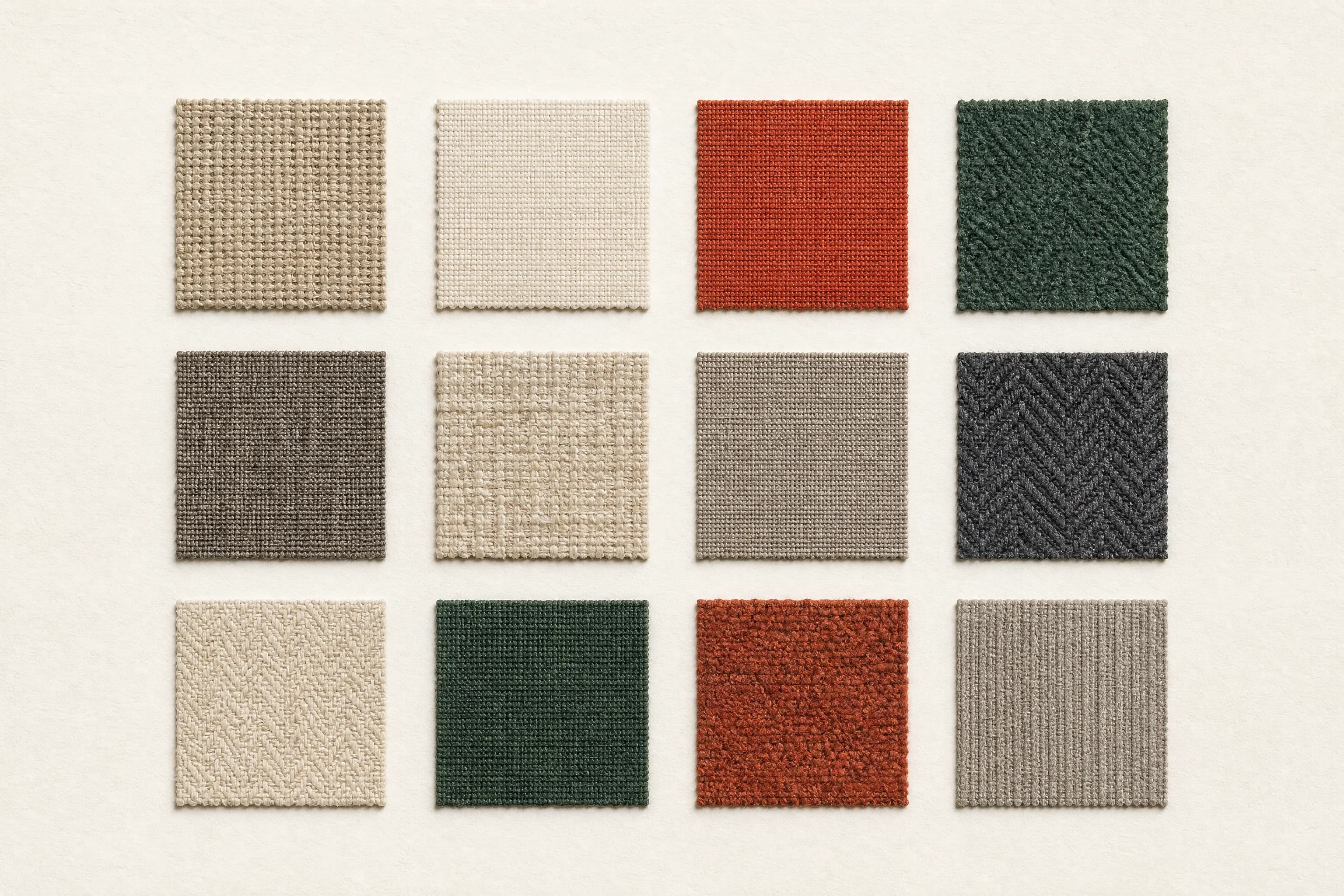
A grid of twelve fabric swatches in different weaves and colours on archival paper.
Reference plate — twelve constructions, five fibres
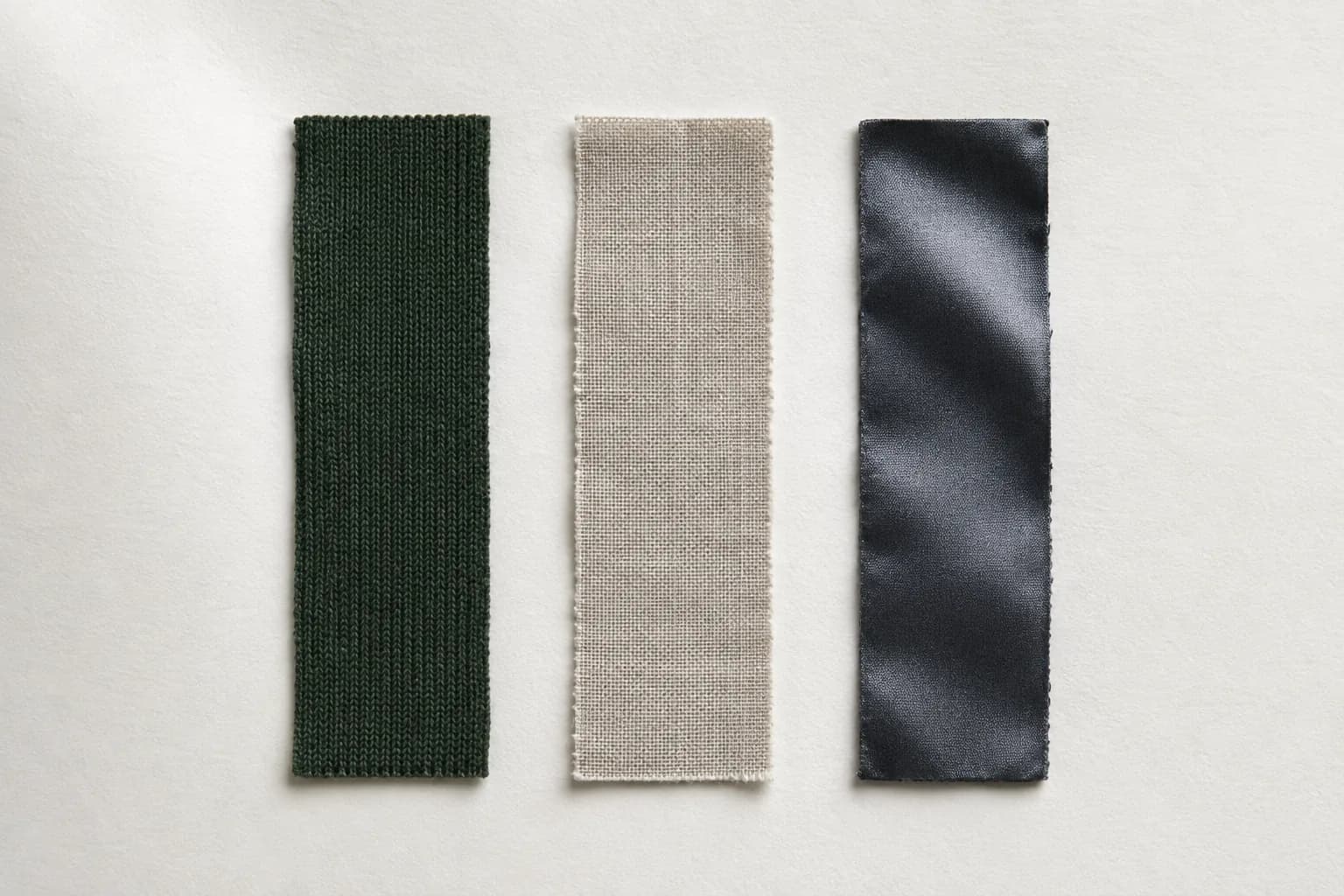
Three narrow fabric strips laid parallel on archival paper.
Three constructions, three hands
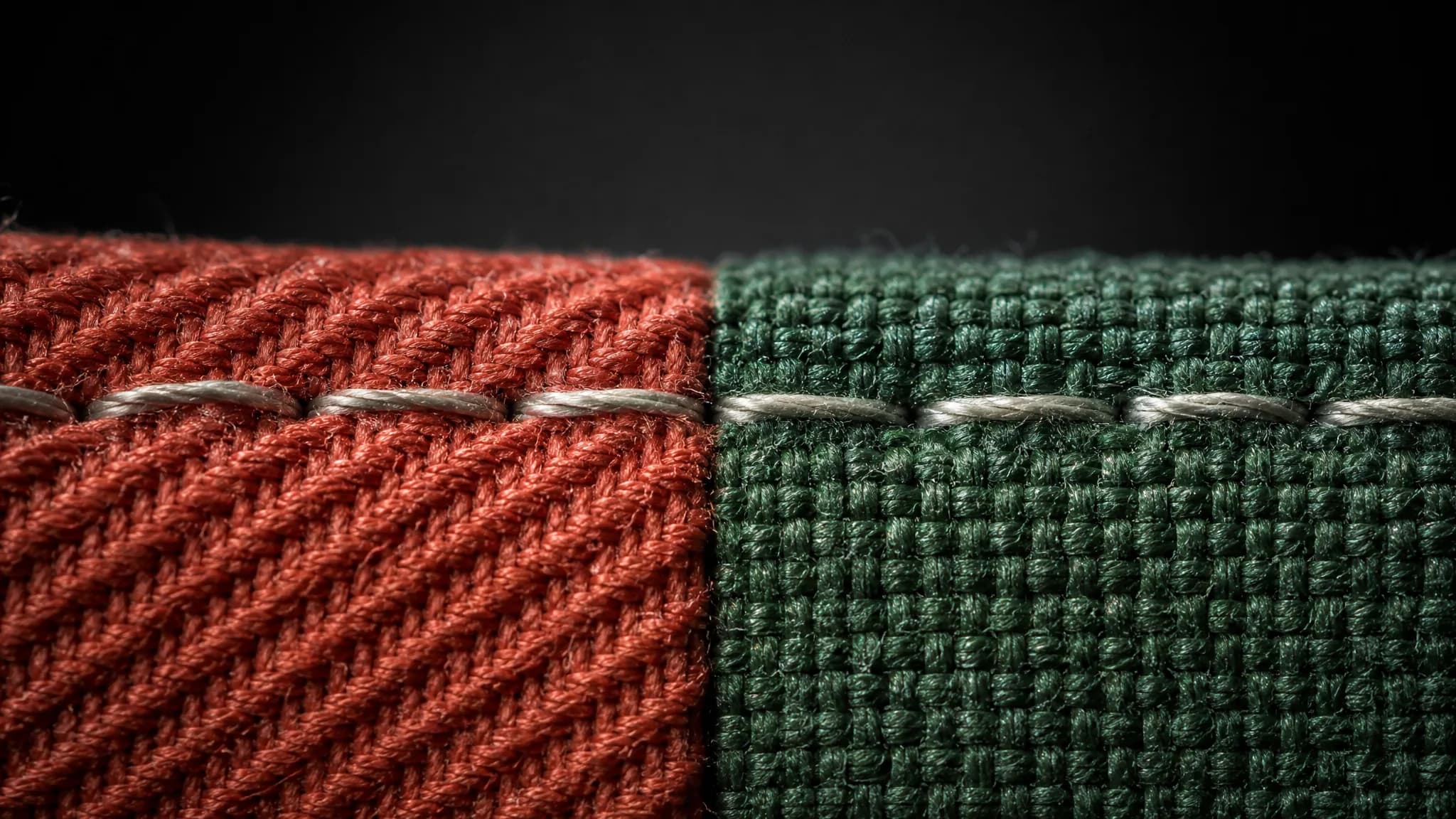
Macro of one row of stitching passing from a rust twill into a green plain weave.
One thread, two materials
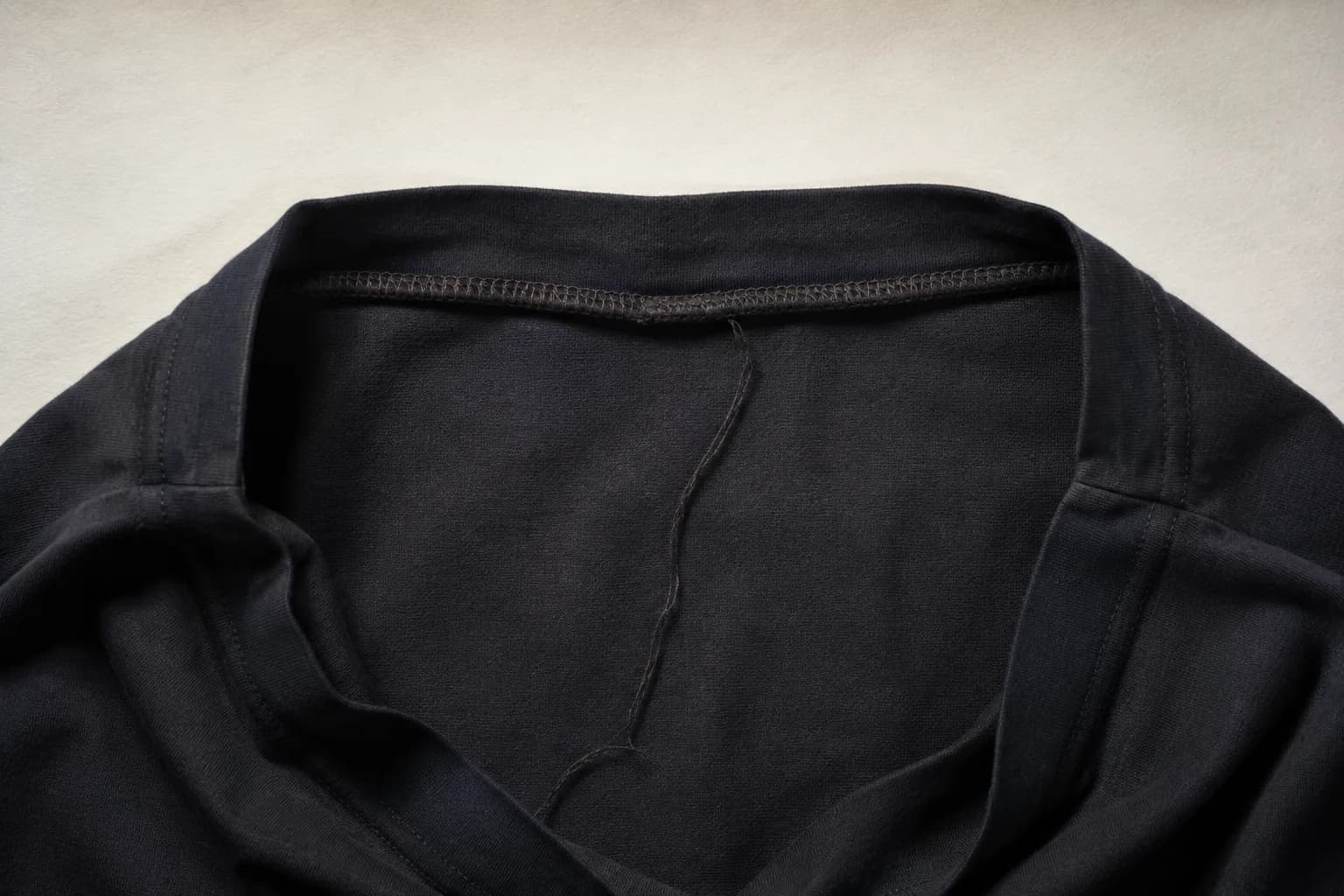
The inside neckline of a dark garment folded open, showing an overlocked seam.
Neck tape and overlocked seam
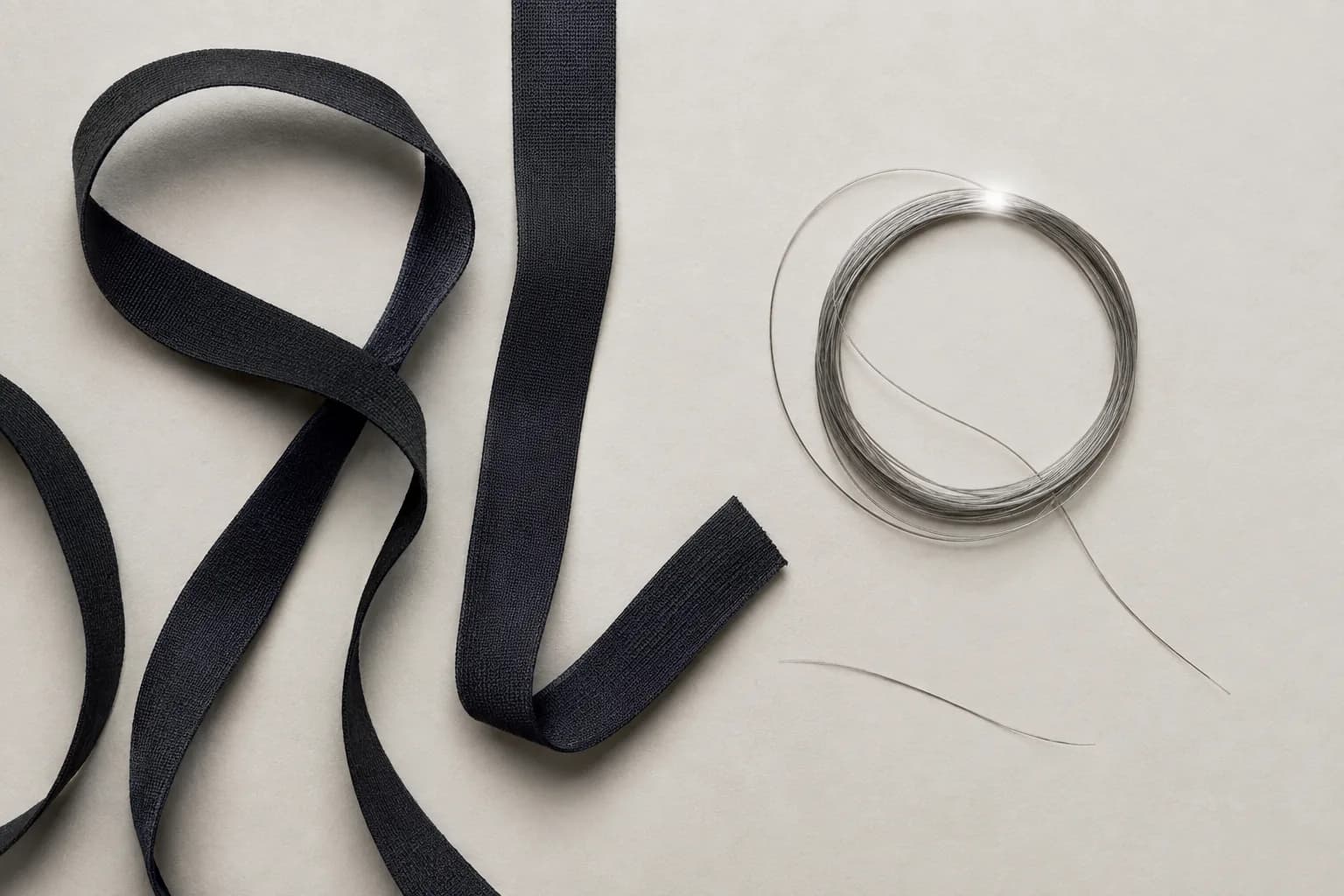
A length of dark elastic knit tape and a coil of fine synthetic thread on archival paper.
Elastic tape, sewing filament
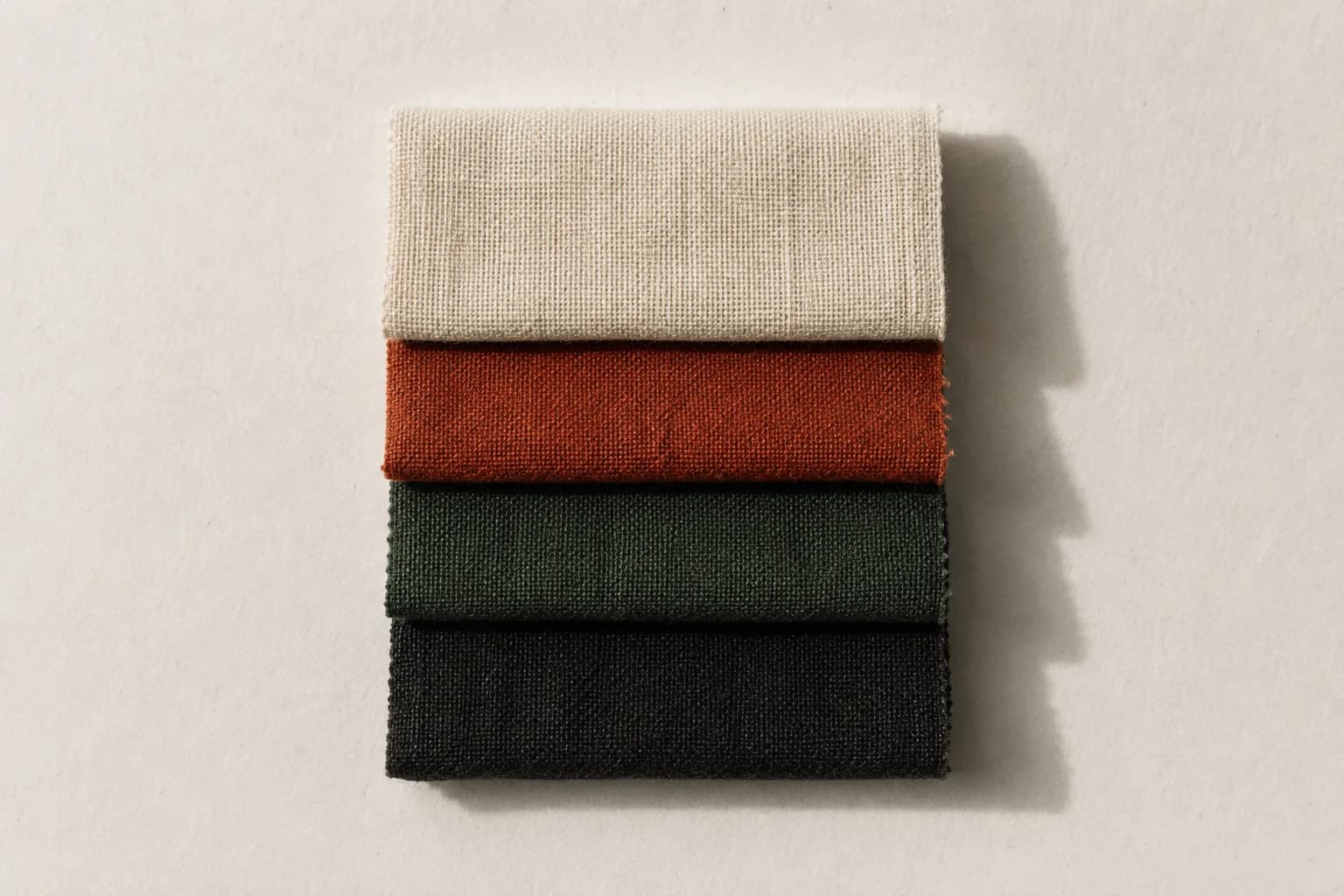
Four fabric swatches stacked with aligned edges on archival paper.
Four compositions, stacked
Extreme close-up of a sewn-in care label at an oblique angle, its print far out of focus.

A label lists fibres. It stops there.

06The limits of the label

Most of a garment is not on the label

This list appears on every result this service produces, and it is never abbreviated. It exists to stop you settling on a fibre when the likely explanation was never printed on the tag.

  1. 01

    Dyes and pigments

    Colour is not a fibre and is not on the label. Two garments with identical composition can be dyed with entirely different chemistry.

  2. 02

    Resin and easy-care finishes

    Crease-resistant, shrink-resistant and water-repellent treatments are applied after the cloth is made. Nothing on the label records them.

  3. 03

    Seams, threads, tapes and interfacing

    The composition applies to the main fabric. Neck tapes, overlocked seams, sewing thread and stiffeners can be a different material entirely, and they are what sits against you.

  4. 04

    Detergent and softener residue

    What is left in the cloth after washing travels with the garment and is not a property of the garment. New clothes also carry residue from manufacturing until they have been washed.

  5. 05

    Fit, weight and how the cloth moves

    Friction, trapped heat and moisture are physical, not chemical. A tight cuff in a fibre that never bothers you can still be the thing you notice.
Five fibres you will read most often

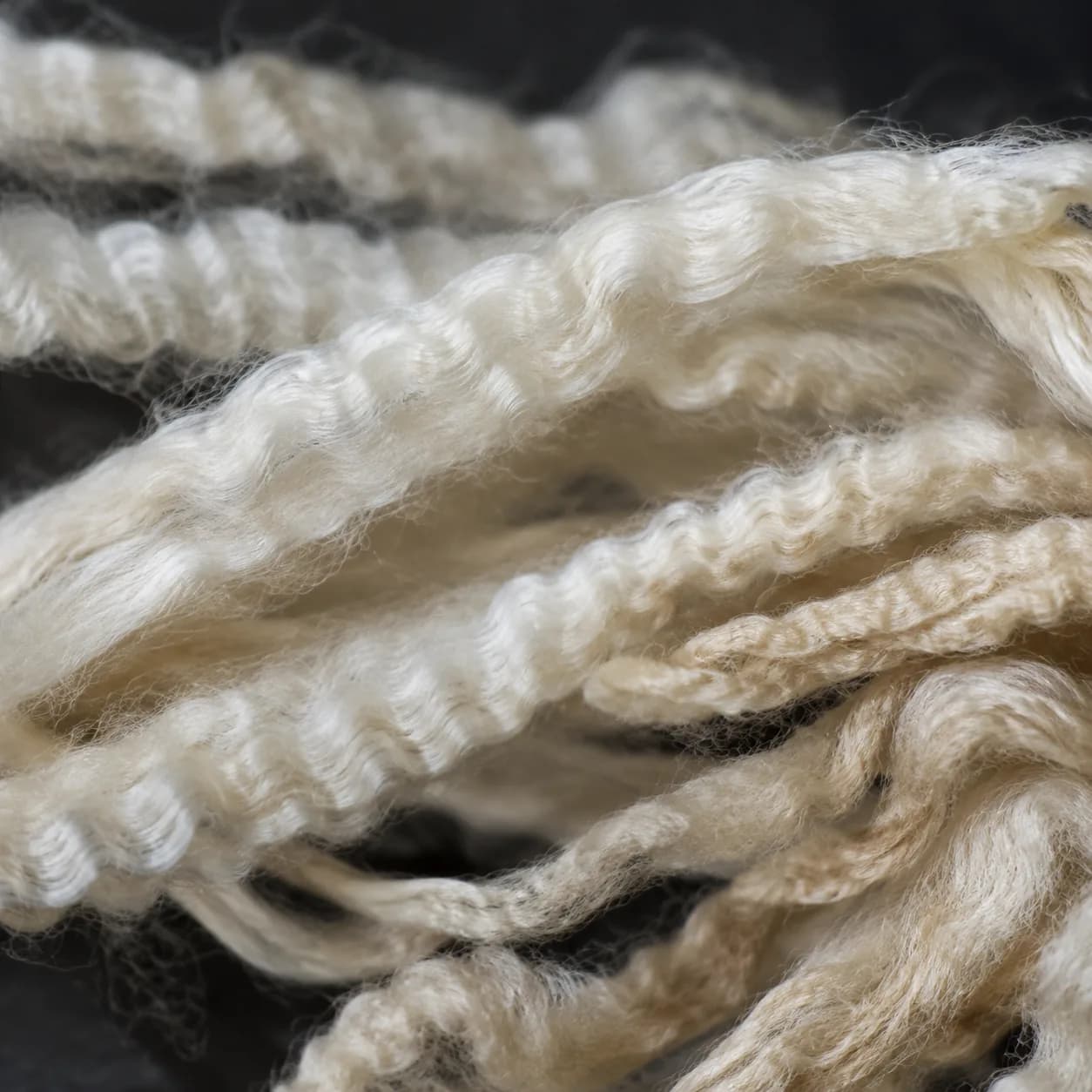
  • Macro photograph of raw cotton fibre, soft twisted ribbons.

    Cotton

    Flat twisted ribbons. Absorbs and holds moisture.

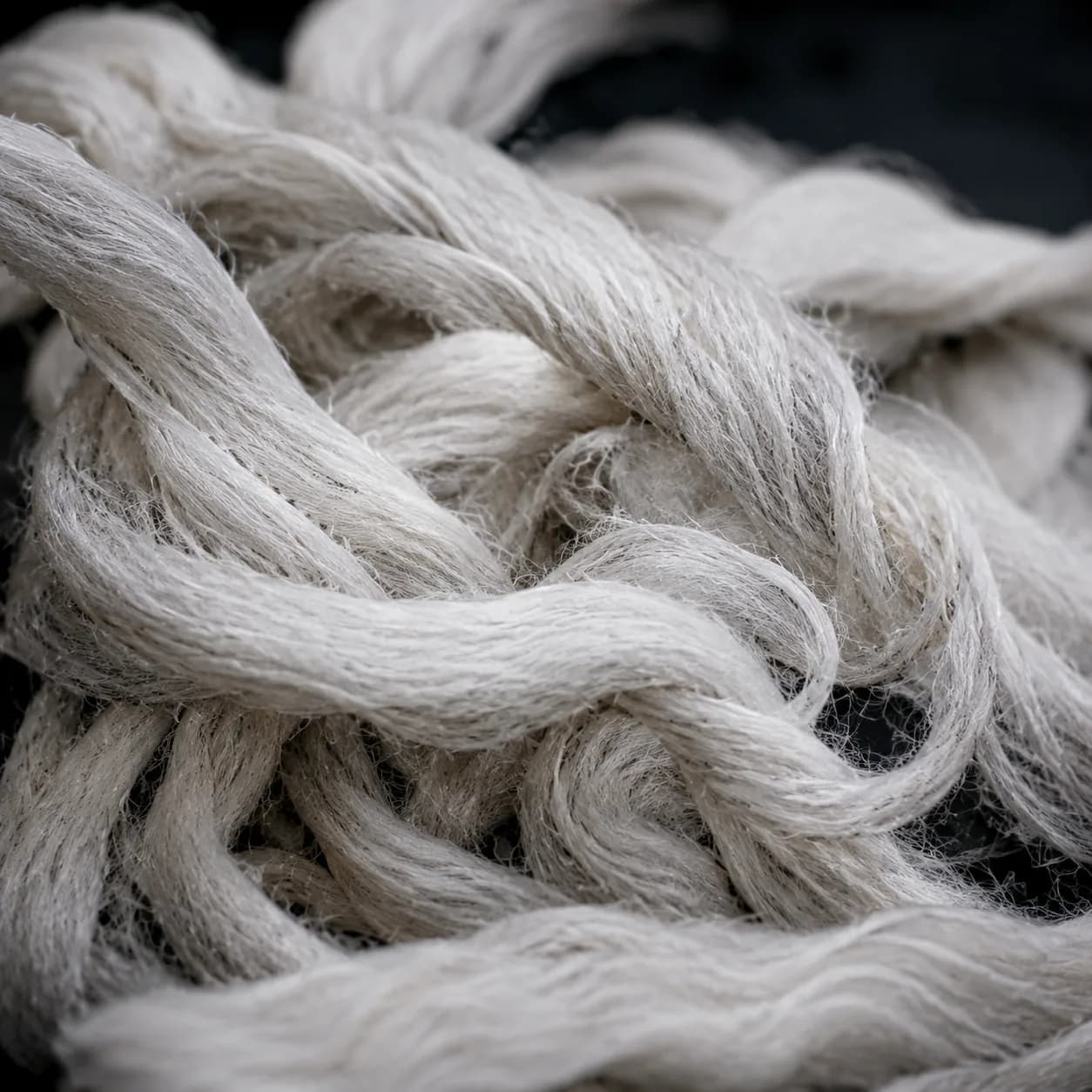
  • Macro photograph of crimped wool staple fibre.

    Wool

    Crimped and scaled. Diameter varies enormously between grades.

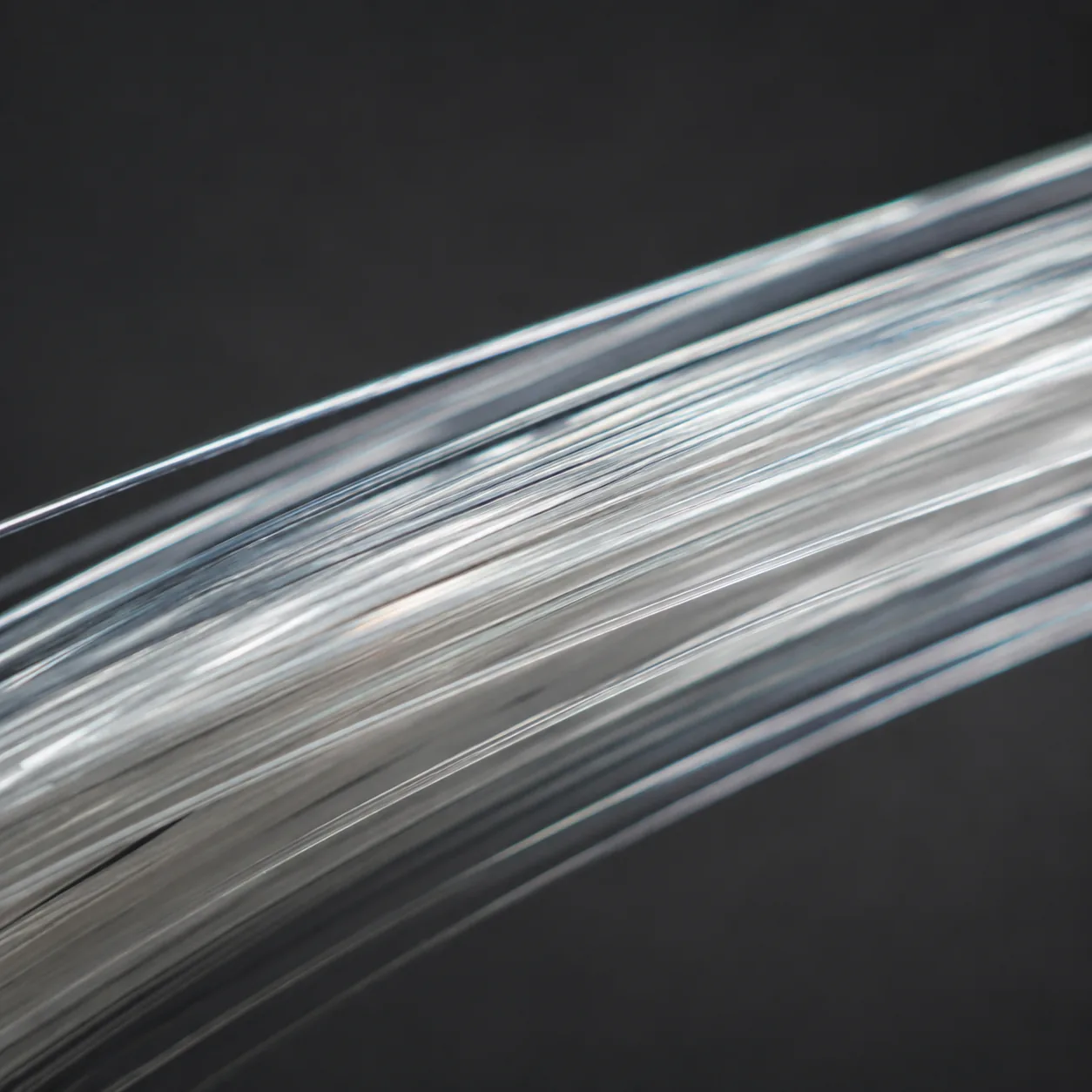
  • Macro photograph of smooth parallel polyester filaments.

    Polyester

    Smooth continuous filament. Holds very little moisture.

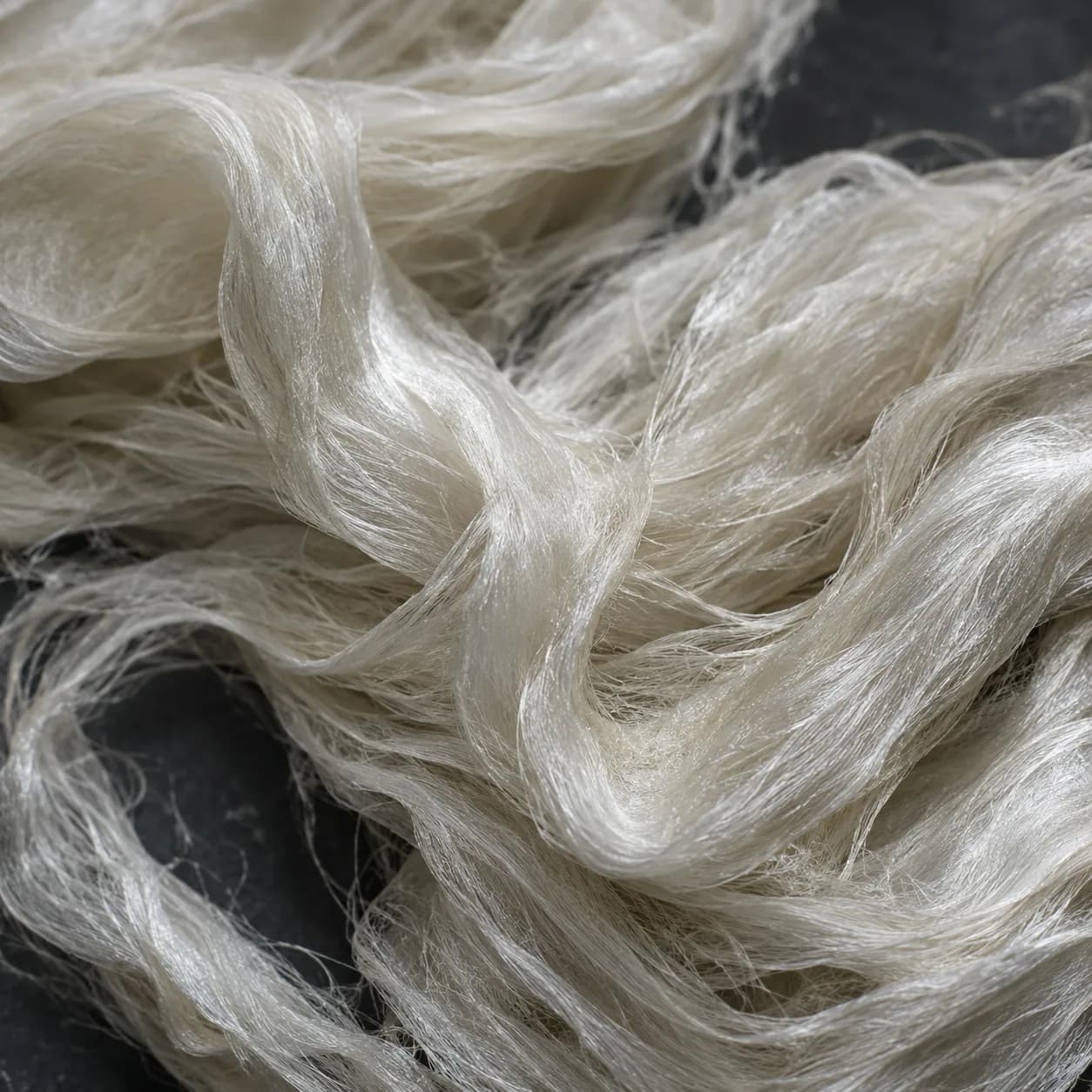
  • Macro photograph of soft lustrous viscose filaments.

    Viscose

    Made from cellulose by a chemical process. Neither natural nor synthetic by any simple reading.

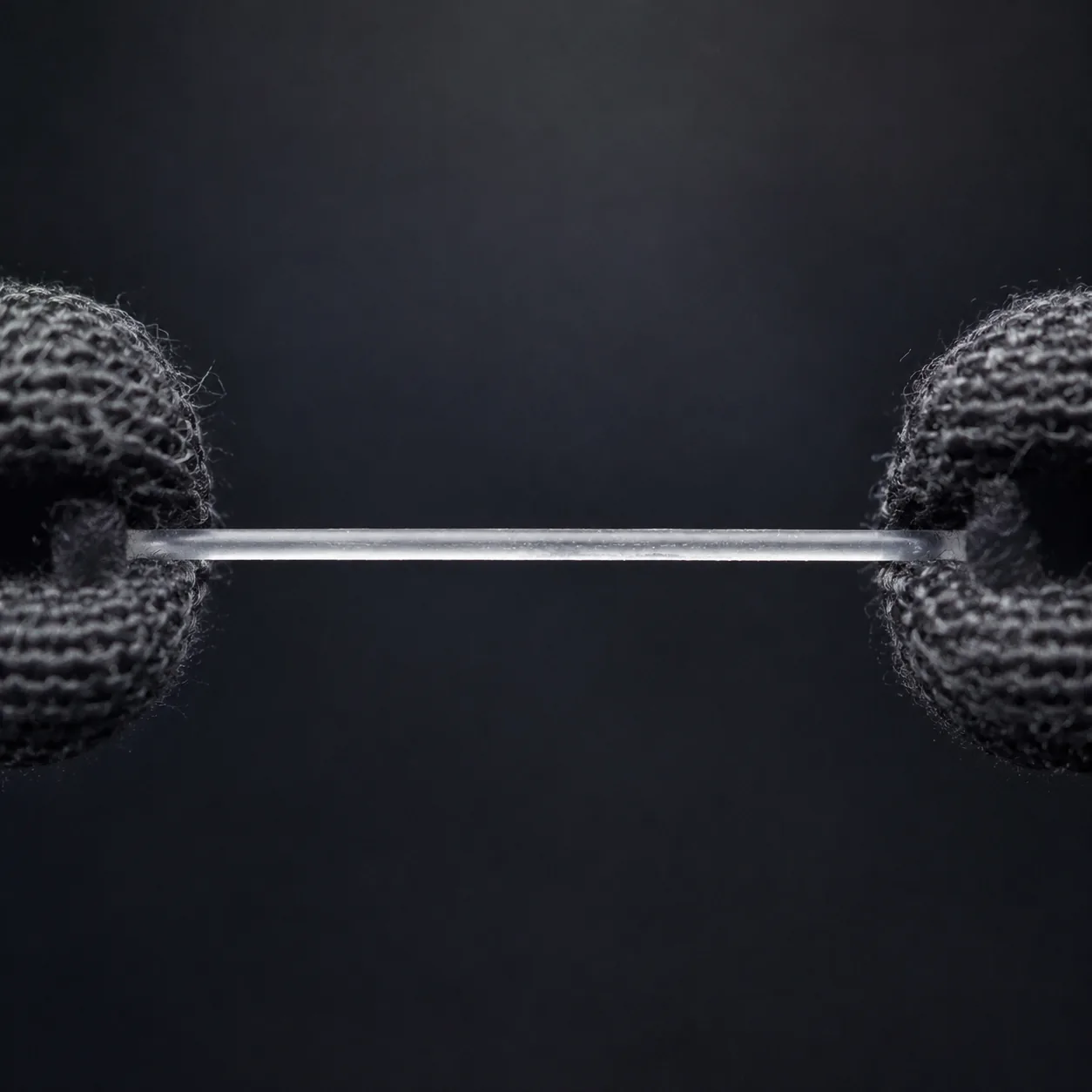
  • Macro photograph of a fine translucent elastane filament held between knit loops.

    Elastane

    Rarely more than a few percent, and rarely the fibre against the skin.

None of these is gentler than the others as a rule. A coarse wool and a fine merino are the same fibre and behave nothing alike; a smooth polyester lining and a rough polyester knit share a name and little else. That is why this service compares your own garments rather than telling you what to buy.

07Plans

Free is enough to find out if this works

Six garments — three that bother you, three that never do — runs the method end to end. That is deliberately enough to see whether the answer is worth anything to you.

Where paying starts to matter

Three against three produces coincidences: with so few garments, a fibre can end up on one side by chance. Fifteen against fifteen does not. The paid plans exist because comparing a dozen labels by hand is the kind of task nobody actually finishes — and because people want to check a new garment while standing in the shop.

Allowance costs
One question in the comparison box1
Reading one composition label2
One comparison table and findings card5

Prices in USD, taxes included

Free

01

$0

Enough to run one comparison end to end and see whether the method tells you anything.

50 allowance units per month · up to 6 garments

  • Up to 6 items — 3 that bother you, 3 that never do
  • Full cross-comparison table
  • Findings card with a watermark
  • Everything the label doesn't cover, in full
  • Watermarked findings card
  • No print layout
  • No saved composition record
Start without an account

Check

02

$9/month

Three against three produces coincidences. A dozen against a dozen produces something you can act on.

420 allowance units per month · unlimited garments

  • Unlimited items in both groups
  • No watermark
  • Print layout for the findings card
  • Saved composition record across comparisons
Choose Check

Trace

03

$26/month

For when the question keeps coming back — a standing record you check a new purchase against in the shop.

1550 allowance units per month · unlimited garments

  • Everything in Check
  • Long-run tracking across months
  • Quick check of a new item against your existing record
  • Priority queue
Choose Trace

Paid plans renew automatically at the end of each period — monthly plans every month, yearly plans every year — at the price shown above, until you cancel. You can cancel at any time from your billing page, in the same number of steps it took to subscribe, and the plan then runs to the end of the period already paid for. Allowances reset each period and do not carry over. There are no credit packs and no stored balance.

Consumers in the European Union have a 14-day right of withdrawal. See rétractation for how it applies to a service that starts immediately, and CGV for the refund and cancellation terms in full.

Full plan comparison and terms

08Questions

The awkward ones first

Nothing here is hidden behind a click. If a term matters enough to ask about, it matters enough to read in full.

01Is this a medical test?

No. Skinsafe is not a medical service. It runs no test on you, and it gives no diagnosis, no treatment and no health advice of any kind.

What it does is arithmetic on text printed on labels: it lists the fibres in the garments that bother you, lists the fibres in the garments that never do, and shows you which appear in only one of the two lists. A fibre appearing on one side and not the other is a place to look. It is not a finding about your body, and this service is not equipped to make one.

It also does not accept photographs of a body or of skin — there is no upload for them anywhere on the site.

02My skin has been red and swollen for days. What should I do?

Please see a doctor or a pharmacist. That is the whole answer, and we are not going to dress it up with a comparison table.

Anything on the skin that breaks, weeps, swells, spreads, lasts several days, or comes with any effect elsewhere in the body is outside what a list of fibre percentages can speak to. If you describe something like that in the comparison box, this service stops and says so instead of producing a result.

03What happens to my photographs? Do you train anything on them?

A label photograph is used to read the fibres and percentages off it, and for nothing else. It is never used to train a model, ours or anyone else’s.

Whatever you type about which garments bother you is used for the comparison in front of you. It is not attached to your account long-term, not built into a profile, and not sold or shared. No health information is collected at any point — the best protection for information of that kind is not to hold it.

Details, retention periods and how to have data deleted are in the politique de confidentialité.

04How reliable is the reading of a label?

Automated reading of a photograph gets things wrong — poor light, a curled label, a worn print, an unfamiliar abbreviation. Every composition is shown to you as text before the comparison runs, and you can correct any of it. You can also skip photographs entirely and type the compositions in yourself.

The comparison itself is not a judgement call. Set intersection and set difference are computed in your browser from the compositions you confirmed, so the result follows directly from what you entered. Read the avertissement IA for what the automated part can and cannot do.

05Can I get a refund, and what about the right of withdrawal?

Consumers in the European Union have 14 days to withdraw from a contract concluded on this site, without giving a reason. There is a withdrawal function in the footer of every page and at the top of your billing page; it takes two steps and sends you a written acknowledgement.

Because this is a digital service that can start immediately, you are asked separately at checkout whether you want it to start straight away — and, if so, to acknowledge what that means for the withdrawal right. Those are two distinct boxes and neither is ticked for you. If you do not tick them, the service simply begins when the withdrawal period ends.

Full terms, including refunds, are in the CGV and on the rétractation page.

06How do I cancel, and do unused allowances carry over?

Cancel from your billing page, in the same number of steps it took to subscribe. Your plan then runs to the end of the period you have already paid for and does not renew.

Allowances reset at the start of each period and do not carry over. There are no credit packs, no top-ups and no stored balance — an allowance is permission to use the service during a period, not money, and it cannot be transferred or cashed out. If you run out, the only option is to move up a plan or wait for the next period.

07Do I need an account to try it?

No. Open the comparison, type or photograph a few compositions, and the table and findings card are produced in your browser. Nothing is kept unless you ask for it to be.

An account exists for two reasons only: to keep a record you can add to over months, and to hold a subscription.

08Is there a minimum age?

This service is for people aged 16 and over. It is not designed for children, and accounts are not opened for them. Where local law sets a higher age for entering a contract without a guardian, that age applies instead.

Start

Put them side by side

Two garments that bother you and two that never do is enough to begin. No account, no card, and no conclusion until there is a control group to draw one from.